How to Start Budgeting Without Feeling Overwhelmed

If you’ve ever tried to start budgeting only to feel stressed, confused, or completely overwhelmed after five minutes… you are definitely not alone.
A lot of people think budgeting means:
- cutting out everything fun
- tracking every penny obsessively
- using complicated spreadsheets
- or being “good with money”
But honestly? Budgeting doesn’t have to look like any of that.
The truth is, budgeting is simply learning how to give your money a purpose instead of wondering where it disappeared to every month. And once you start simplifying it, it becomes so much less intimidating.
One of the biggest mistakes beginners make is trying to completely change their finances overnight. They download ten apps, create unrealistic goals, and try to follow strict budgeting systems that don’t fit their real life. That usually leads to burnout fast.
Instead, the goal should be creating a budgeting routine that feels sustainable, realistic, and easy to stick to long term.
Whether you’re trying to:
- save more money
- stop impulse spending
- organize your finances
- pay off debt
- prepare for future goals
- or simply feel more in control of your money…
Starting small makes a huge difference.
In this guide, we’re going to go through simple beginner budgeting tips that can help you start organizing your finances without feeling overwhelmed.
Why Budgeting Feels So Overwhelming
Before learning how to budget, it’s important to understand why it can feel emotionally exhausting in the first place.
For many people, finances carry stress, guilt, anxiety, or even embarrassment. Sometimes we avoid budgeting because we’re afraid of what we’ll see once we look at our spending habits closely.
Other times, social media makes budgeting seem overly complicated. You’ll see:
- color-coded spreadsheets
- complex investing advice
- unrealistic savings goals
- strict “no spend” lifestyles
- or people acting like they have everything figured out
But real life doesn’t always look that organized.
Especially for busy women, moms, or families, finances are often connected to:
- groceries
- bills
- kids
- unexpected expenses
- rising costs
- and trying to balance everything at once
That’s why simple budgeting systems usually work better than overly strict ones.
Budgeting should reduce stress — not create more of it.
Step 1: Stop Trying to Be Perfect
One of the best budgeting tips for beginners is to let go of perfection immediately.
You do not need:
- the perfect budget
- the perfect savings plan
- or perfect spending habits
You simply need awareness.
Your first budget will probably need adjustments. That’s normal.
Maybe you underestimated groceries.
Maybe your kids needed something unexpected.
Maybe you forgot a bill.
Maybe you spent more eating out than planned.
That does not mean you failed.
Budgeting is not about punishment — it’s about learning your patterns and improving slowly over time.
The people who succeed financially are usually not the people who are perfect. They’re the people who stay consistent.
Step 2: Know Where Your Money Is Going
Before creating a monthly budget, you need to understand your current spending habits.
This is where many people have their first “wow” moment.
Start by reviewing:
- bank statements
- credit card transactions
- subscriptions
- grocery spending
- takeout
- Amazon purchases
- impulse shopping
- entertainment expenses
You don’t need to judge yourself while doing this.
The goal is simply awareness.
You may notice:
- small purchases adding up quickly
- subscriptions you forgot about
- emotional spending habits
- overspending in certain categories
- or areas where you could realistically cut back
Sometimes people think they need to make huge financial sacrifices when in reality, small adjustments create the biggest long-term changes.
Even saving:
- $5 here
- $20 there
- or reducing impulse purchases
…can make a noticeable difference over time.
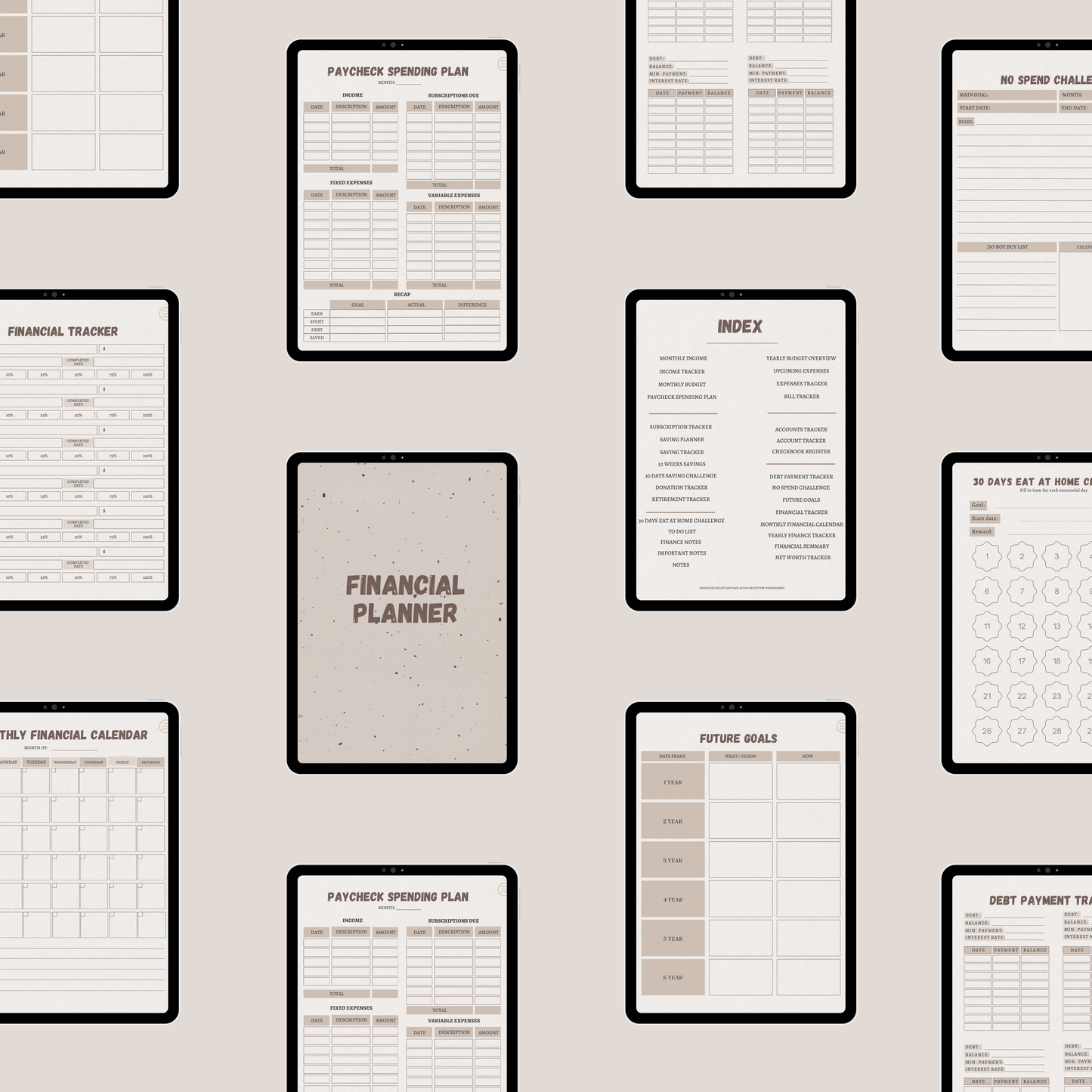
This is also why many people find using a digital financial planner so helpful. Having expense trackers, monthly budget pages, savings trackers, and bill organization all in one place can make finances feel much less chaotic.
Step 3: Start With a Simple Monthly Budget
A beginner budget should feel simple.
You do not need 50 budgeting categories.
Start with the basics:
- Housing
- Utilities
- Groceries
- Transportation
- Insurance
- Debt payments
- Savings
- Personal spending
That’s it.
The simpler your budget feels, the easier it becomes to maintain consistently.
One helpful budgeting method for beginners is the 50/30/20 rule:
- 50% needs
- 30% wants
- 20% savings or debt payoff
Of course, everyone’s situation is different, especially with today’s living costs, but having a general structure can help you stay organized.
Another important thing to remember is that your budget should support your real life.
If you love getting coffee once a week, include it.
If family movie nights matter to you, include them.
Completely restricting yourself often leads to binge spending later.
A realistic budget is always better than a perfect one you can’t maintain.
Step 4: Create Financial Goals That Actually Motivate You
Budgeting becomes much easier when you have goals attached to it.
Saving money feels more meaningful when you know what you’re working toward.
Your financial goals could include:
- building an emergency fund
- paying off debt
- saving for a vacation
- staying home with your kids
- reducing financial stress
- buying a house
- paying off your car
- growing savings
- becoming financially independent
The key is making your goals feel personal and realistic.
Instead of saying:
“I need to save more money.”
Try:
“I want to save $1,000 for emergencies.”
Specific goals feel more achievable.
This is also where visual savings trackers can become incredibly motivating. Seeing progress visually often encourages consistency much more than simply thinking about numbers mentally.
Step 5: Use a Financial Planner to Stay Organized
One of the easiest ways to reduce financial overwhelm is by creating organization systems that work for your lifestyle.
When finances feel scattered, budgeting usually feels stressful too.
A financial planner can help organize:
- monthly budgets
- bills
- savings goals
- sinking funds
- debt tracking
- expense tracking
- subscriptions
- financial priorities
- monthly financial check-ins
Instead of trying to remember everything mentally, you have one organized place to manage it all.
Many people also find digital planners especially helpful because they’re easy to update, reusable, and convenient to access regularly.
The more visually organized your finances become, the less emotionally overwhelming they tend to feel.
And honestly, sometimes the biggest financial improvement starts simply by becoming more intentional.

Step 6: Track Your Spending Without Obsessing
Tracking your spending does not mean staring at your bank account 24/7.
The goal is awareness, not anxiety.
A lot of people quit budgeting because they become overly restrictive or obsessive with every dollar.
Instead:
- check in weekly
- review spending categories
- notice patterns
- and make small adjustments
That’s enough.
You want budgeting to feel supportive, not exhausting.
Some weeks will look better than others. That’s normal.
Unexpected expenses happen:
- school activities
- medical costs
- birthdays
- car maintenance
- groceries increasing
- home expenses
Budgeting is not about controlling every situation perfectly. It’s about preparing better over time.
Step 7: Build Better Money Habits Slowly
Small financial habits create massive long-term results.
And honestly, consistency matters far more than intensity.
Some simple money habits that can improve your finances over time include:
- checking your budget weekly
- meal planning before grocery shopping
- avoiding emotional impulse purchases
- unsubscribing from tempting marketing emails
- setting savings goals
- automating savings transfers
- reviewing subscriptions monthly
- planning purchases ahead of time
Habit stacking can also work really well with budgeting.
The idea comes from the book Atomic Habits by James Clear and focuses on attaching a new habit to an existing routine.
For example:
After I drink my morning coffee, I review my finances for 5 minutes.
- Before I order takeout, I check my weekly food budget.
- After paying bills, I transfer money into savings.
These tiny routines may seem small, but over time they create consistency.
And consistency is what changes finances long term.
Step 8: Create Weekly Financial Check-Ins
One of the most underrated budgeting tips is having a weekly financial reset.
Instead of waiting until things feel chaotic, create a small routine every week.
Your financial check-in could include:
- reviewing spending
- checking upcoming bills
- updating savings trackers
- planning groceries
- reviewing subscriptions
- adjusting next week’s spending
This can take as little as 15–20 minutes.
Some people like doing this:
- Sunday evenings
- Monday mornings
- during coffee time
- or during quiet moments at home
The goal is simply staying connected to your finances regularly instead of avoiding them completely.
Little weekly check-ins prevent bigger financial stress later.
Common Budgeting Mistakes Beginners Make
Trying To Change Everything Overnight
Small consistent changes usually work better than extreme budgeting.
Creating Unrealistic Budgets
If your budget feels impossible to maintain, you probably won’t stick to it long term.
Forgetting Irregular Expenses
Things like:
- birthdays
- holidays
- school expenses
- car maintenance
- and home repairs
…still need to be planned for.
This is where sinking funds can help a lot.
Comparing Your Finances to Others
Social media often shows highlight reels — not reality.
Focus on your own progress.
Giving Up After One Bad Month
One overspending month does not ruin your financial journey.
Progress matters more than perfection.
Budgeting Can Become a Form of Self-Care
This may sound surprising, but organizing your finances can genuinely improve your mental wellness.
Financial stress affects:
- sleep
- anxiety
- relationships
- confidence
- and overall peace of mind
Budgeting is not about becoming restrictive or obsessed with money.
It’s about creating stability.
It’s about reducing the constant mental clutter of:
- forgotten bills
- financial uncertainty
- impulse spending guilt
- or feeling out of control financially
When you start organizing your money intentionally, life often feels calmer overall.
And honestly, that peace of mind is worth so much.
Final Thoughts
Starting a budget does not need to feel overwhelming.
You do not need complicated spreadsheets, perfect finances, or extreme money-saving rules to begin improving your financial habits.
Start small.
Focus on:
- awareness
- consistency
- organization
- and realistic financial goals
The small habits you build today can create huge changes over time.
And remember, budgeting is not about restriction. It’s about creating a life that feels more organized, intentional, and financially secure.
Little by little, those small financial decisions truly add up.