10 Things That Helped Me Lose Weight Without Obsessing Over Calories

For a long time, I thought losing weight had to mean constantly tracking every calorie, starting over every Monday, or following overly restrictive routines that didn’t realistically fit into my life.
Like many women, I would feel motivated for a few days, try to do everything perfectly, get overwhelmed, and eventually fall back into old habits. It felt exhausting constantly feeling like wellness had to be “all or nothing.”
Over time, I slowly realized that the habits that actually helped me the most were the ones that felt realistic and sustainable.
Instead of obsessing over being perfect, I started focusing more on:
- consistency
- routines
- simple wellness habits
- balanced meals
- movement I enjoyed
- creating systems that made healthy choices easier
And honestly, that shift changed everything for me mentally.
If you’ve been trying to create a healthier lifestyle without feeling consumed by dieting, these are some of the habits that genuinely helped me approach weight loss in a more balanced and realistic way.
1. Prioritizing Protein Instead of Restriction
One of the biggest changes I made was focusing less on restriction and more on adding nourishing foods to my meals.
Protein became one of the main things I tried prioritizing because it helped me feel fuller longer and more satisfied throughout the day.
Instead of constantly thinking about what I “couldn’t” eat, I started focusing more on building balanced meals with foods like:
- eggs
- chicken
- Greek yogurt
- cottage cheese
- salmon
- tuna
- protein smoothies
- protein coffee
- turkey burgers
- roasted lentils
This approach felt much more sustainable than extreme dieting.
It also helped reduce the constant urge to snack throughout the day because my meals actually felt satisfying.
One thing I learned is that realistic wellness often feels less overwhelming when you focus on adding supportive habits instead of constantly trying to remove everything you enjoy.
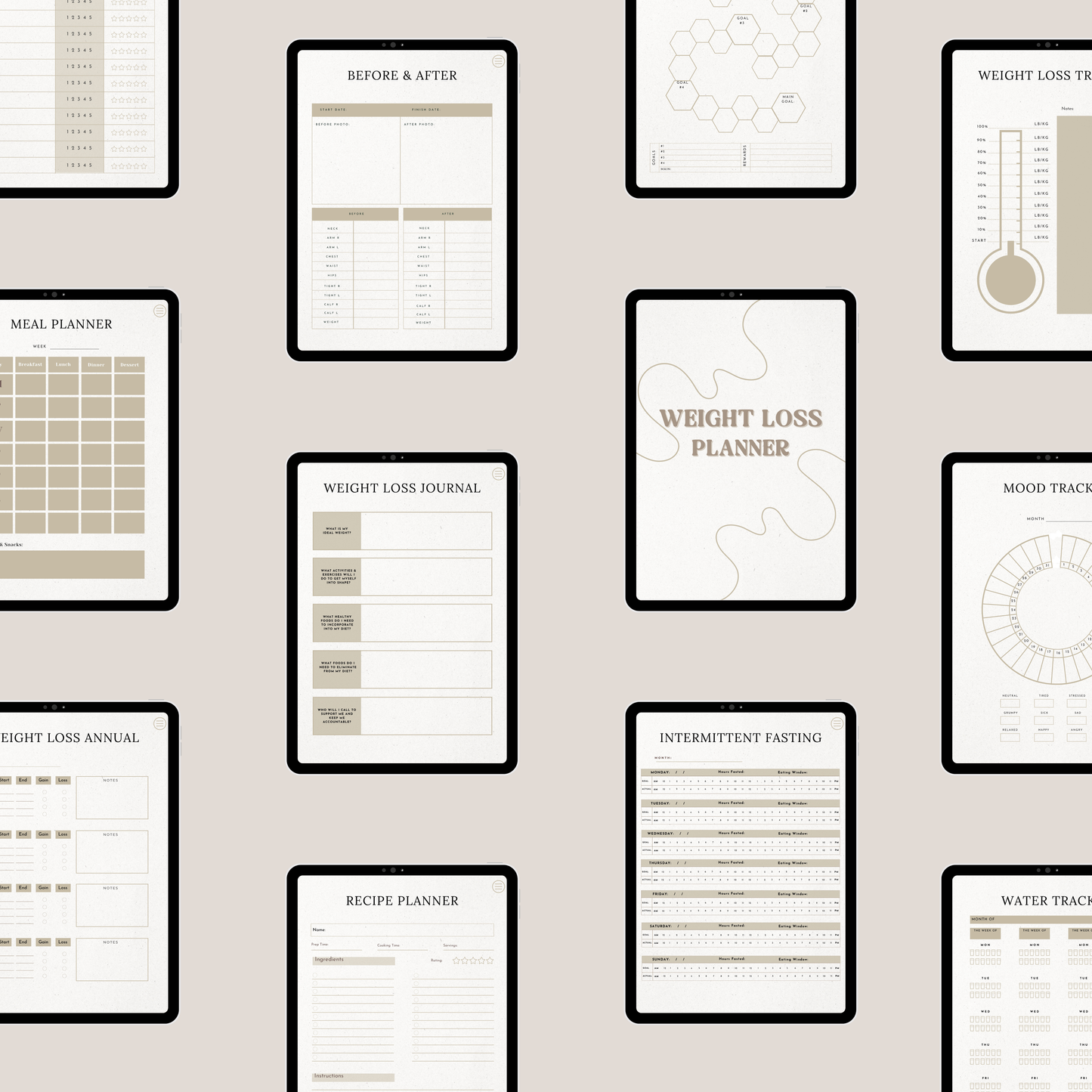
2. Using a Digital Weight Loss Planner to Stay Organized
One of the things that genuinely helped me stay more consistent was using a digital weight loss planner.
I realized that a huge part of my struggle wasn’t necessarily lack of motivation, it was feeling disorganized and constantly feeling like I was “starting over.”

Having a planner helped me keep everything in one place:
- meal planning
- grocery list
- workout routines
- water intake
- habit tracking
- progress photos
- wellness goals
- reflections
- daily routines
And honestly, having structure made wellness feel so much less stressful.
Instead of waking up every day trying to figure everything out from scratch, I already had a plan prepared ahead of time.
One thing I especially love about tracking habits is that it helps you notice patterns over time.
For example:
- maybe you feel better when you stay hydrated
- maybe meal prepping helps you stay more consistent
- maybe walking daily improves your energy
- maybe sleep affects your cravings more than you realized
Tracking these habits can create more awareness around the routines that actually support your goals.
A planner can also help you focus on progress beyond the scale.
Sometimes progress looks like:
- having more energy
- improving your routines
- staying consistent longer than before
- cooking more meals at home
- improving workouts
- drinking more water
- feeling more confident
And for busy women especially, reducing mental overwhelm can make healthy habits feel much more manageable.
3. Walking More Throughout the Week
Walking became one of the most realistic forms of movement for me.
For a long time, I thought workouts had to be intense to “count,” but I eventually realized that simple daily movement can truly add up over time.
Walking felt approachable, low stress, and easier to stay consistent with during busy seasons of life.
Some simple ways I incorporated more movement included:
- A short morning walks
- walking after meals
- walking while listening to podcasts
- using a walking pad
- family walks after dinner
- taking movement breaks throughout the day
I also noticed that walking helped me mentally.
Sometimes wellness is not only about physical changes — it’s also about creating routines that help you feel better emotionally and mentally too.
4. Focusing on Habits Instead of Fast Results
One of the biggest mindset shifts for me was realizing that sustainable wellness usually comes from small habits repeated consistently over time.
Social media often makes it seem like progress should happen overnight, but realistic wellness usually looks much slower and less dramatic.
Instead of obsessing over:
- fast weight loss
- perfection
- unrealistic timelines
I started focusing more on habits like:
- drinking more water
- moving daily
- improving meals
- meal prepping
- sleeping better
- creating routines
These habits may not feel flashy, but they can slowly create meaningful long-term changes.
And honestly, focusing on habits instead of quick results helped me build a healthier relationship with wellness overall.
5. Letting Go of the “All or Nothing” Mentality
This mindset shift helped me more than I can explain.
For years, I treated wellness like:
- either I was doing everything perfectly
- or I completely failed
If I had one off day, one restaurant meal, or missed one workout, I would often spiral into the mindset of:
“I already ruined everything.”
But real life does not work that way.
One meal does not ruin progress.
One weekend does not ruin progress.
Missing a workout does not ruin progress.
Learning how to continue after imperfect days is honestly one of the most important parts of creating sustainable wellness habits.
Consistency matters far more than perfection.
6. Incorporating Intermittent Fasting in a More Balanced Way
Another habit that helped simplify wellness for me was incorporating intermittent fasting a few times per week in a way that felt realistic and balanced.
One method I personally found manageable was the 16:8 approach.
This usually means:
- fasting for 16 hours
- eating within an 8-hour window
For example:
- first meal around 11am
- last meal around 7pm
Instead of doing it every single day, I personally preferred doing it about three times per week because it felt more sustainable and easier to maintain long term.
What I liked most was that it helped simplify eating and reduced mindless late-night snacking without feeling overly restrictive.
It felt less overwhelming than constantly obsessing over calories.
I also became interested in learning more about how fasting may affect women differently throughout different phases of the menstrual cycle after reading Fast Like a Girl.
The book discusses how some women prefer adjusting fasting routines during certain phases of their cycle instead of fasting aggressively all month long.
For example:
- some women may prefer gentler fasting around their cycle
- others may focus more on nourishment and recovery during certain phases
- some women feel better changing fasting intensity depending on energy levels
I personally liked the idea of approaching wellness with more flexibility and listening to my body instead of forcing extremely rigid routines.
And honestly, that balanced mindset made wellness feel much more sustainable for me mentally.
7. Drinking More Water Throughout the Day
Hydration is one of those habits that seems simple, but it can genuinely impact how you feel daily.
When I stayed more consistent with water intake, I noticed improvements in:
- energy
- cravings
- digestion
- focus
- overall wellness routines
One thing that helped me was making hydration more visible and convenient.
Keeping a water bottle nearby throughout the day made a surprisingly big difference.
I also started pairing hydration with habits I already did automatically throughout the day.
For example:
- drinking water while making coffee
- drinking water after brushing my teeth
- drinking water before meals
Making habits easier and more automatic helped me stay more consistent without relying only on motivation.
8. Meal Prepping Simpler Foods
Meal prep used to feel intimidating to me because social media made it seem like every meal needed to look perfectly aesthetic and elaborate.
But eventually I realized simple meals worked much better for my real life.
Some realistic meal prep ideas that helped me included:
- grilled chicken
- roasted vegetables
- overnight oats
- smoothie ingredients
- yogurt bowls
- hard boiled eggs
- salmon and rice bowls
- taco bowls
- chopped fruit
- protein snacks
The goal was not perfection.
The goal was simply making healthier choices easier during busy days.
And honestly, convenience plays a huge role in consistency.
9. Creating Better Systems Instead of Relying on Motivation
One of the biggest things I learned is that motivation comes and goes.
Some days you’ll feel incredibly motivated.
Other days you absolutely won’t.
That’s why creating systems and routines can help so much more long term than relying purely on motivation.
One thing that helped me tremendously was preparing things ahead of time the night before.
Simple things like:
- laying out workout clothes
- preparing my water bottle
- prepping breakfast ingredients
- organizing supplements
- writing down my workout ahead of time
made healthy habits feel easier the next day.
These small actions reduce friction and decision fatigue.
And honestly, when things feel easier, you’re much more likely to stay consistent.
I also became really interested in the idea of “habit stacking” after learning about it in Atomic Habits.
Habit stacking is essentially attaching a new habit to an existing habit you already do automatically.
One habit stacking formula is:
“After I [CURRENT HABIT], I will [NEW HABIT].”
Examples:
- After I brush my teeth, I will drink water.
- After I make my coffee, I will prep my protein shake.
- After dinner, I will prepare tomorrow’s gym clothes.
Another habit stacking formula is:
“Before I [CURRENT HABIT], I will [NEW HABIT].”
Examples:
- Before I make coffee, I will drink a glass of water.
- Before I shower, I will lay out my workout clothes.
- Before I leave the kitchen at night, I will prep breakfast ingredients.
These small systems may seem simple, but over time they can help healthy habits start feeling more automatic instead of forced.
10. Giving Myself More Grace During My Journey
One of the most important things I’ve learned is that wellness journeys are rarely linear.
There will be:
- stressful weeks
- imperfect days
- busy seasons
- setbacks
- low motivation days
And that’s normal.
Being overly hard on yourself usually doesn’t create sustainable consistency.
Learning how to continue moving forward without constantly restarting can make such a big difference mentally.
Small habits truly add up over time.
And honestly, realistic wellness feels so much more sustainable when you stop trying to become a completely different person overnight.
Final Thoughts
Losing weight without obsessing over calories became much more realistic for me once I shifted my focus toward consistency, routines, and balanced habits instead of perfection.
The habits that helped me most were often the simplest ones:
- eating more protein
- walking more
- staying hydrated
- meal prepping
- creating systems
- improving routines
- staying organized
And while no routine will look exactly the same for everyone, finding habits that realistically fit your lifestyle can make wellness feel much more manageable long term.
If you’re someone who enjoys staying organized during your wellness journey, using a digital weight loss planner can also be a helpful tool for tracking routines, meals, habits, workouts, goals, and overall progress in one place.