How I Organized My First Pregnancy Week by Week

When I found out I was pregnant for the first time, I wanted to remember everything.
The excitement.
The milestones.
The appointments.
The cravings.
The baby kicks.
The emotions.
But I quickly realized there was a lot more to keep track of than I expected.
Between doctor appointments, pregnancy symptoms, baby preparation, and everyday life, it became easy to feel overwhelmed. I didn’t want dozens of notebooks, endless checklists, or a planner that felt like another full-time job.
What I needed was something simple.
A system that helped me stay organized without adding more work to my already busy life.
That’s exactly why I started organizing my pregnancy week by week.
Not with complicated routines or pages of busy work. Just a simple pregnancy planning system that helped me keep track of what mattered most.
If you’re a first-time mom, here’s how a simple weekly pregnancy journal helped me feel more organized, less overwhelmed, and more connected throughout my pregnancy journey.


My First Pregnancy Felt Like Information Overload
One of the biggest surprises during my first pregnancy was how much information there was.
Every week seemed to bring something new.
A new symptom.
A new milestone.
A new appointment.
A new thing to research.
I constantly felt like I was trying to remember everything at once.
As a first-time mom, I didn’t want to forget important details, but I also didn’t want pregnancy to become one giant to-do list.
That’s when I realized I needed one place to keep everything organized.
Not ten different notebooks.
Not random phone notes.
Not sticky notes scattered around the house.
Just one place where I could quickly keep track of my pregnancy journey.

I Needed a System That Didn’t Feel Like Homework
One thing I noticed while looking at pregnancy journals was that many of them felt overwhelming.
Some expected daily entries.
Some had pages and pages to fill out.
Some felt like they would take longer to complete than I actually had available.
As a first-time mom, that wasn’t what I needed.
I wasn’t looking for more work.
I was looking for less mental clutter.
I wanted a pregnancy journal that focused on what was actually important without requiring hours of my time every week.
Because let’s be honest.
Pregnancy is already exhausting enough.

Every Week I Tracked the Same Few Things
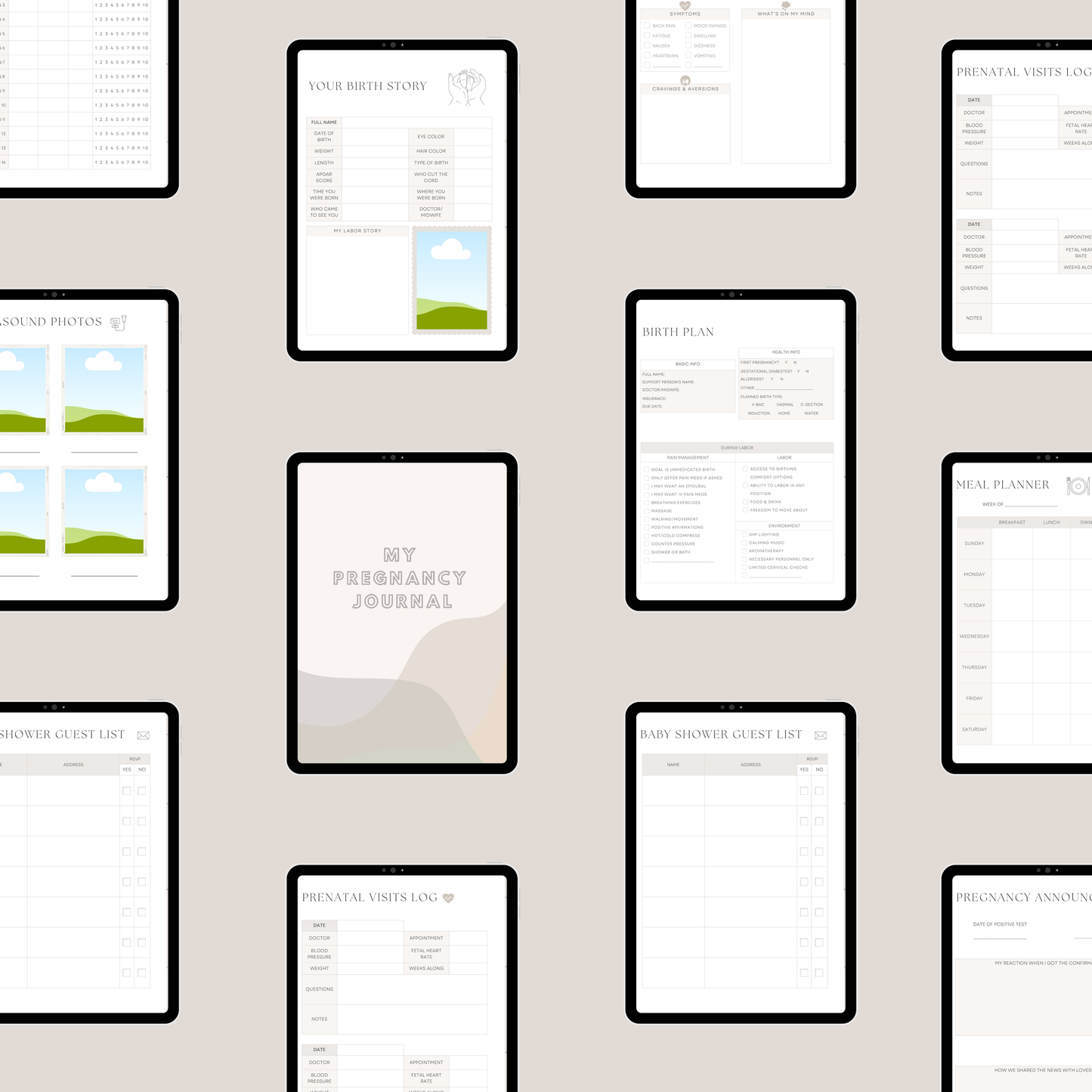
One of my favorite things about using a simple pregnancy journal was that it only took a few minutes each week.
Instead of tracking dozens of things every day, I simply documented what mattered most.
Each week I could quickly record:
- how far along I was
- pregnancy symptoms
- important appointments
- baby milestones
- cravings
- food aversions
- thoughts and memories from that week
That’s it.
No complicated daily tracking.
No pressure.
No spending an hour filling out pages.
The weekly pages could be completed in about five minutes, which made it realistic to actually keep up with throughout pregnancy.
And honestly, that’s what made the biggest difference.
Simple systems are easier to stick with.

Pregnancy Felt Less Overwhelming When Everything Was in One Place
One thing I didn’t expect was how much calmer I felt when everything was organized.
Instead of trying to remember:
- appointment dates
- symptoms
- questions for my doctor
- milestone moments
I knew exactly where everything was.
Having a pregnancy journal gave me a place to collect all those little details that would otherwise live in my head.
And as a first-time mom, that mental relief was huge.
Pregnancy already comes with enough uncertainty.
Having a simple system made me feel much more prepared.

My Favorite Pregnancy Planning Pages
While the weekly pages were what I used most often, I also loved having additional planning pages available as my pregnancy progressed.
The difference was that I could complete them when I needed them.
There was no pressure to fill everything out immediately.
As different stages of pregnancy approached, I could gradually work through pages like:
- hospital bag checklist
- birth plan
- baby name ideas
- important contacts
- baby preparation notes
- pregnancy memories
I wasn’t filling out dozens of pages every week.
I was simply using the pages that made sense at that particular stage of pregnancy.
That made the planner feel supportive rather than overwhelming.


The Memories I’m Most Grateful I Recorded
At the beginning of pregnancy, I thought I would always remember everything.
But now I know that’s not true.
Some of my favorite memories are the small details I wrote down along the way.
Things like:
- weekly belly pictures
- funny cravings
- foods I suddenly couldn’t stand
- how I felt hearing the heartbeat for the first time
- little thoughts about becoming a mom
- milestone moments
- pregnancy surprises
Those details might seem small at the time.
But looking back, they’re some of the memories I treasure most.
A pregnancy journal becomes more than a planner.
It becomes a keepsake of an entire season of life.


Why Simple Is Better During Pregnancy
I think many first-time moms believe they need the most detailed planner possible.
But my experience was the opposite.
The simpler the system, the more likely I was to actually use it.
Pregnancy already requires so much mental energy.
A journal should reduce stress, not create more of it.
That’s why I believe the best pregnancy planning systems focus on:
- simplicity
- organization
- important milestones
- meaningful memories
Without unnecessary fluff.
Without pages that never get used.
Without creating another task to complete.

Why I Recommend a Pregnancy Journal for First-Time Moms
If I could give one piece of advice to another first-time mom, it would be this:
Give yourself a simple place to keep your pregnancy journey organized.
Not because you need to document every detail perfectly.
But because pregnancy moves faster than you think.
A pregnancy journal can help you:
- stay organized
- remember important milestones
- prepare for baby
- process emotions
- keep everything in one place
- feel less overwhelmed
And when the system is simple enough to use consistently, it becomes even more valuable.
Becoming THAT MAMA Starts With Simple Systems
One thing I’ve learned is that becoming THAT MAMA doesn’t happen through perfection.
It happens through small intentional habits.
Through creating systems that support you.
Through giving yourself tools that make life feel a little calmer and a little more organized.
During my first pregnancy, having a simple pregnancy journal helped me feel more prepared, more organized, and more connected to the journey.
Not because I filled out hundreds of pages.
But because I focused on what mattered.
And sometimes that’s exactly what first-time moms need most.

Final Thoughts
Your first pregnancy is filled with moments you’ll never experience in quite the same way again.
Keeping a pregnancy journal can help you stay organized, preserve memories, and create a simple system that supports you throughout the journey.
The best pregnancy journal isn’t the one with the most pages.
It’s the one you’ll actually use.
For me, that meant spending just a few minutes each week tracking milestones, symptoms, cravings, appointments, and memories while gradually filling out planning pages as pregnancy progressed.
Simple.
Practical.
Meaningful.
And exactly what I needed during my first pregnancy.
—————————
Frequently Asked Questions
How do first-time moms stay organized during pregnancy?
Many first-time moms use a pregnancy journal or pregnancy planner to keep appointments, symptoms, milestones, and baby preparation organized in one place.
What should I track during pregnancy each week?
Many moms track symptoms, appointments, cravings, food aversions, milestones, and weekly memories throughout pregnancy.
Is a digital pregnancy journal worth it?
A pregnancy journal can help first-time moms stay organized, preserve memories, prepare for baby, and feel less overwhelmed throughout pregnancy.
How long does it take to fill out a pregnancy journal?
Some pregnancy journals can take significant time, but simple pregnancy journals may only require a few minutes each week to track important milestones and memories.