15 Simple Self-Care Habits That Can Change Your Life

There was a time when I thought self-care had to look perfect to actually “count.”
I thought it meant waking up at 5 AM, following complicated wellness routines, drinking green juices every day, and somehow always having the energy to stay on top of everything.
But honestly? Real life doesn’t look like that for most of us.
Especially as busy women, moms, or anyone simply trying to keep up with everyday life, self-care usually needs to be simple, realistic, and flexible to actually become part of your routine.
Over time, I realized that the small habits were the ones that made the biggest difference. Tiny changes slowly helped me feel more balanced, calmer, more motivated, and honestly… more like myself again.
The good news is that self-care doesn’t need to be expensive, overwhelming, or time-consuming to improve your life.
Sometimes the smallest wellness habits can completely shift how you feel mentally, emotionally, and physically.
If you’ve been wanting to create a healthier and more realistic wellness routine, here are some simple self-care habits that can truly make a difference.
Why Self-Care Doesn’t Have to Be Complicated
Social media sometimes makes wellness feel overwhelming.
Perfect morning routines, expensive products, complicated habits, endless checklists…
But real self-care is less about perfection and more about consistency.
The goal isn’t to create a life that looks aesthetic online.
The goal is to create habits that genuinely help you feel better in your everyday life.
Some seasons of life are busy. Some are exhausting. Some feel emotionally heavy.
That’s why realistic self-care matters so much.
Small wellness habits are easier to stick to long term, and over time they create a huge impact on your mental wellness, energy levels, and overall lifestyle.
You don’t need a complete life reset overnight.
You just need small moments of care repeated consistently.
1. Start Your Morning Without Immediately Checking Your Phone
One of the simplest self-care habits that can improve your mental wellness is avoiding your phone first thing in the morning.
It’s so easy to wake up and immediately start scrolling through notifications, emails, social media, or stressful news before your brain even has a chance to wake up peacefully.
Even giving yourself 10–15 minutes before checking your phone can make a huge difference.
Instead, try:
- stretching
- drinking water
- opening the blinds
- making coffee slowly
- journaling
- sitting outside for a few minutes
Your nervous system doesn’t need instant chaos the second you wake up.
A slower morning can completely change the tone of your day.
2. Create a Simple Wellness Routine You Can Actually Stick To
A lot of people quit wellness routines because they try to change everything at once.
Instead of creating a two-hour routine that feels impossible to maintain, focus on building a realistic self-care routine that fits your actual lifestyle.
Maybe your wellness routine looks like:
- drinking more water
- walking daily
- journaling for 5 minutes
- going to bed earlier
- reading before bed
- stretching at night
Simple habits are easier to stay consistent with.
And consistency matters much more than perfection.
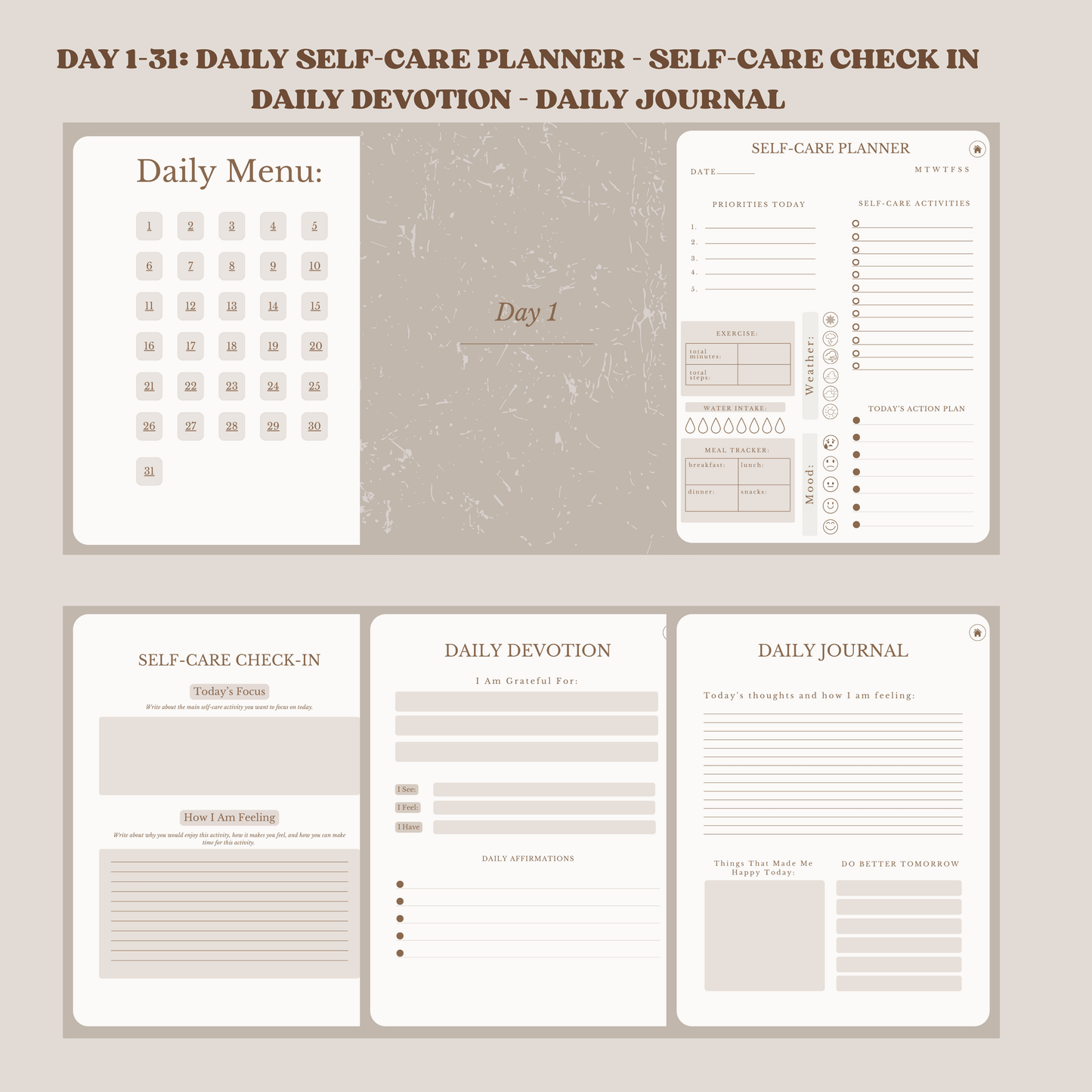
One thing that personally helped me stay more organized and intentional with my wellness habits was using a digital self-care planner. Having a place to track routines, goals, habits, and reflections made self-care feel much more manageable instead of overwhelming.
Sometimes seeing your habits written down can help you stay motivated in a realistic way.
3. Move Your Body in a Way That Feels Good
Exercise doesn’t need to feel like punishment.
You don’t need intense workouts every single day for movement to benefit your mental and physical wellness.
Some days movement can look like:
- walking outside
- stretching
- yoga
- dancing in your kitchen
- a short home workout
- using a walking pad
- lifting weights
- following a quick workout video
Movement should support your body, not make you hate your routine.
When you stop viewing exercise as something you “have” to do and start viewing it as self-care, it becomes much easier to stay consistent.
Even 15–20 minutes can help boost:
- mood
- energy
- stress management
- sleep quality
- confidence
The best workout routine is the one you can realistically maintain.
4. Drink More Water Throughout the Day
This sounds simple, but hydration truly affects almost everything.
Energy levels, headaches, digestion, skin, focus, and even mood can all be impacted by dehydration.
A lot of us are simply not drinking enough water consistently.
One thing that helps is making hydration easier and more enjoyable.
Try:
- using a water bottle you genuinely like
- adding lemon or fruit
- keeping water near you throughout the day
- setting small reminders
- drinking water before coffee or meals
Small wellness habits like hydration may seem minor, but they add up over time.
5. Spend Less Time Doomscrolling
We live in a world where our brains constantly consume information.
Sometimes without realizing it, we spend hours scrolling through stressful, negative, or overwhelming content online.
And mentally, it can leave us feeling drained.
Self-care sometimes means protecting your mental space.
You don’t need to completely quit social media, but setting boundaries can help significantly.
Try:
- limiting scrolling before bed
- taking short social media breaks
- unfollowing accounts that make you feel worse
- spending more time consuming positive or inspiring content
- replacing scrolling with hobbies sometimes
Your mental wellness matters.
Not every free moment needs to be filled with endless scrolling.
6. Start Journaling Your Thoughts and Feelings
Journaling is one of the most underrated self-care habits.
Writing things down can help:
- organize your thoughts
- reduce stress
- process emotions
- improve self-awareness
- clear mental clutter
- track habits and goals
And journaling doesn’t need to be deep or complicated.
Some days it can simply be:
- writing how you feel
- gratitude lists
- brain dumps
- wellness tracking
- habit tracking
- goal setting
- writing affirmations
There’s something calming about putting your thoughts somewhere outside your mind.
If you struggle with consistency, using a guided digital self-care planner can make journaling feel easier because the prompts and layouts are already there for you.
It removes the pressure of trying to figure out what to write every day.

7. Create a Cozy Evening Routine
Evening routines can help your body and mind slow down after a busy day.
And honestly, self-care doesn’t always need to be productive.
Sometimes it can simply feel comforting.
Your evening routine could include:
- dim lighting
- reading
- skincare
- journaling
- tea or coffee
- stretching
- watching a comfort show
- taking a shower
- listening to calming music
Small cozy habits can help signal to your body that it’s time to relax.
And creating peaceful moments at home can improve your overall wellness more than people realize.
8. Prioritize Sleep as Part of Your Wellness Routine
Sleep affects almost everything:
- mood
- stress
- hormones
- energy
- focus
- cravings
- recovery
Yet so many people sacrifice sleep constantly.
Sometimes we think self-care has to involve buying something or adding more to our routine, when in reality getting enough rest is one of the healthiest things we can do for ourselves.
Improving your sleep habits can start with:
- going to bed earlier
- reducing screen time at night
- keeping your room cooler
- avoiding caffeine too late
- creating a calming nighttime routine
Rest is productive too.
9. Spend More Time Outside
Fresh air and sunlight can genuinely improve your mood.
And no, you don’t need to go on long hikes every day.
Even simple things help:
- sitting outside with coffee
- taking a short walk
- watching the sunset
- reading outdoors
- getting morning sunlight
Spending time outside helps you slow down and reconnect with the present moment.
It’s one of the simplest wellness habits that often gets overlooked.
10. Stop Waiting for Motivation to Take Care of Yourself
One of the biggest mindset shifts that helped me was realizing that motivation isn’t always going to show up first.
Sometimes consistency comes before motivation.
A lot of wellness habits become easier once they become part of your normal routine.
You don’t need to feel perfectly motivated every single day to:
- drink water
- journal
- move your body
- prioritize your mental wellness
- create healthier habits
Small actions repeated consistently matter much more than occasional perfect days.
11. Keep Track of Habits That Make You Feel Better
One thing that often helps with self-care consistency is tracking your habits.
Not in an obsessive way.
But in a mindful way that helps you notice patterns.
Sometimes we don’t realize how much better we feel when we:
- sleep enough
- hydrate consistently
- move daily
- spend less time online
- journal
- create routines
Tracking habits can help you stay aware of what’s actually helping your mental and physical wellness.
This is another reason why I personally love using digital wellness planners. Having a dedicated space for wellness tracking, reflections, routines, and goals can make self-care feel more intentional and motivating.
And because digital planners are flexible, you can customize your routine based on your own lifestyle and season of life.
12. Give Yourself Grace During Hard Seasons
Not every season of life will look perfectly balanced.
Some weeks are stressful. Some seasons are exhausting.
And honestly, part of self-care is learning how to stop expecting perfection from yourself all the time.
You are allowed to:
- rest
- slow down
- start over
- have off days
- change your routine
- prioritize yourself again
Healthy habits should support your life — not make you feel guilty.
The goal isn’t becoming the “perfect” version of yourself.
The goal is creating a lifestyle that helps you feel healthier, calmer, happier, and more connected to yourself over time.
Final Thoughts
Self-care doesn’t need to be overwhelming to change your life.
Most of the time, it’s the small daily habits that slowly create the biggest transformation.
Drinking more water. Journaling. Sleeping better. Moving your body. Spending less time scrolling. Creating peaceful routines.
Tiny habits repeated consistently can completely shift how you feel mentally and physically over time.
And the best part is that self-care doesn’t have to look the same for everyone.
Your wellness routine should fit your life — not someone else’s version of perfection online.
Start small.
Choose one or two habits that feel realistic for you right now.
And remember: taking care of yourself is never selfish.
⸻
Frequently Asked Questions
What are the best self-care habits?
Some of the best self-care habits include staying hydrated, getting enough sleep, journaling, moving your body regularly, reducing stress, and creating healthy routines that support your mental wellness.
⸻
How do I start a realistic self-care routine?
Start small. Focus on habits you can realistically maintain instead of trying to change everything at once. Even small daily habits can make a big difference over time.
⸻
Does journaling help mental wellness?
Yes. Journaling can help reduce stress, organize thoughts, improve emotional awareness, and create a healthy outlet for processing emotions and daily experiences.
⸻
What counts as self-care?
Self-care can include anything that supports your mental, emotional, or physical well-being. This can include rest, movement, hydration, journaling, healthy routines, spending time outside, or creating peaceful moments throughout your day.
⸻
Are digital self-care planners worth it?
Digital self-care planners can be very helpful for people who want structure, habit tracking, wellness organization, journaling prompts, and a dedicated place to stay consistent with their self-care routines.