Why Tracking 365 Days of Fitness Feels Overwhelming

Every January, millions of people set fitness goals.
They buy a new planner.
They start a new workout program.
They create a vision of who they want to become by the end of the year.
For a few weeks, everything feels exciting.
The goals feel possible.
The motivation is high.
The planner pages are empty and full of potential.
Then life happens.
Work gets busy.
Schedules change.
Kids get sick.
Vacations happen.
A few workouts get missed.
A few pages go unfilled.
And suddenly, what started as an exciting fitness journey begins to feel overwhelming.
The truth is, many people don’t struggle because they lack motivation.
They struggle because a year is a very long time.

A Year Can Feel Bigger Than It Looks
When people think about fitness goals, they often think in yearly terms.
Lose weight this year.
Get stronger this year.
Build healthier habits this year.
While those goals sound reasonable, they can also create a surprising amount of pressure.
A year feels huge.
Twelve months.
Fifty-two weeks.
Three hundred and sixty-five days.
Even before you begin, that’s a lot to think about.
And when you miss a few days or even a few weeks, it can start to feel like you’re falling behind.
Instead of feeling motivated, many people feel discouraged.
Not because they can’t reach their goals.
But because the timeline feels overwhelming.

Fitness Doesn’t Happen in a Straight Line
One of the biggest misconceptions about fitness is that progress happens perfectly.
Workout.
Workout.
Workout.
Results.
Real life rarely works that way.
Some weeks are amazing.
Some weeks are difficult.
Some months feel productive.
Others feel messy.
Especially for moms.
Life changes constantly.
School schedules change.
Family responsibilities change.
Unexpected situations happen.
And that’s normal.
The problem is that many yearly fitness plans don’t leave much room for real life.
When people miss part of the plan, they often feel like they’ve failed.
But missing a week doesn’t erase all your progress.
Missing a month doesn’t mean you should quit.
Progress is rarely linear.
The people who succeed aren’t the people who never get off track.
They’re the people who know how to start again.
The Pressure of Seeing Hundreds of Pages Ahead
Fitness planners can be incredibly helpful.
They provide structure.
Accountability.
Organization.
A place to track progress.
But sometimes the planner itself becomes overwhelming.
Many yearly planners include hundreds of pages.
When you’re looking at an entire year of tracking, planning, and goal setting, the commitment can feel intimidating.
Even if each page only takes a few minutes, the idea of filling out an entire year can feel like a huge responsibility.
And when people fall behind, they often stop using the planner altogether.
Not because the planner isn’t helpful.
Because the planner starts feeling like a reminder of what they didn’t finish.


Why 90 Days Feels Different
This is one of the reasons I love the concept of a 90-day fitness challenge.
Ninety days feels achievable.
It feels focused.
It feels realistic.
Instead of planning an entire year, you’re focused on one challenge, one season, and one transformation at a time.
That shift changes everything.
You’re no longer worrying about what happens ten months from now.
You’re focused on what you can do today.
This week.
This month.
This challenge.
And because the finish line is visible, it becomes easier to stay engaged.
Every completed week feels like progress.
Every completed month feels like an accomplishment.
Every completed challenge feels like a victory.


Every Month Can Be Your January
One of the biggest problems with yearly fitness goals is the idea that January is the only time to begin.
People tell themselves:
“I’ll start next year.”
“I’ll start next month.”
“I’ll start Monday.”
But meaningful change doesn’t care what month it is.
It only cares that you start.
One of my favorite things about a 90-day challenge is that it gives you permission to begin whenever you’re ready.
January.
March.
June.
October.
It doesn’t matter.
Every day is an opportunity to begin again.
Every month can be your January.
That mindset removes so much pressure.
Instead of waiting for the perfect moment, you simply start where you are.

A Different Approach to Fitness Planning
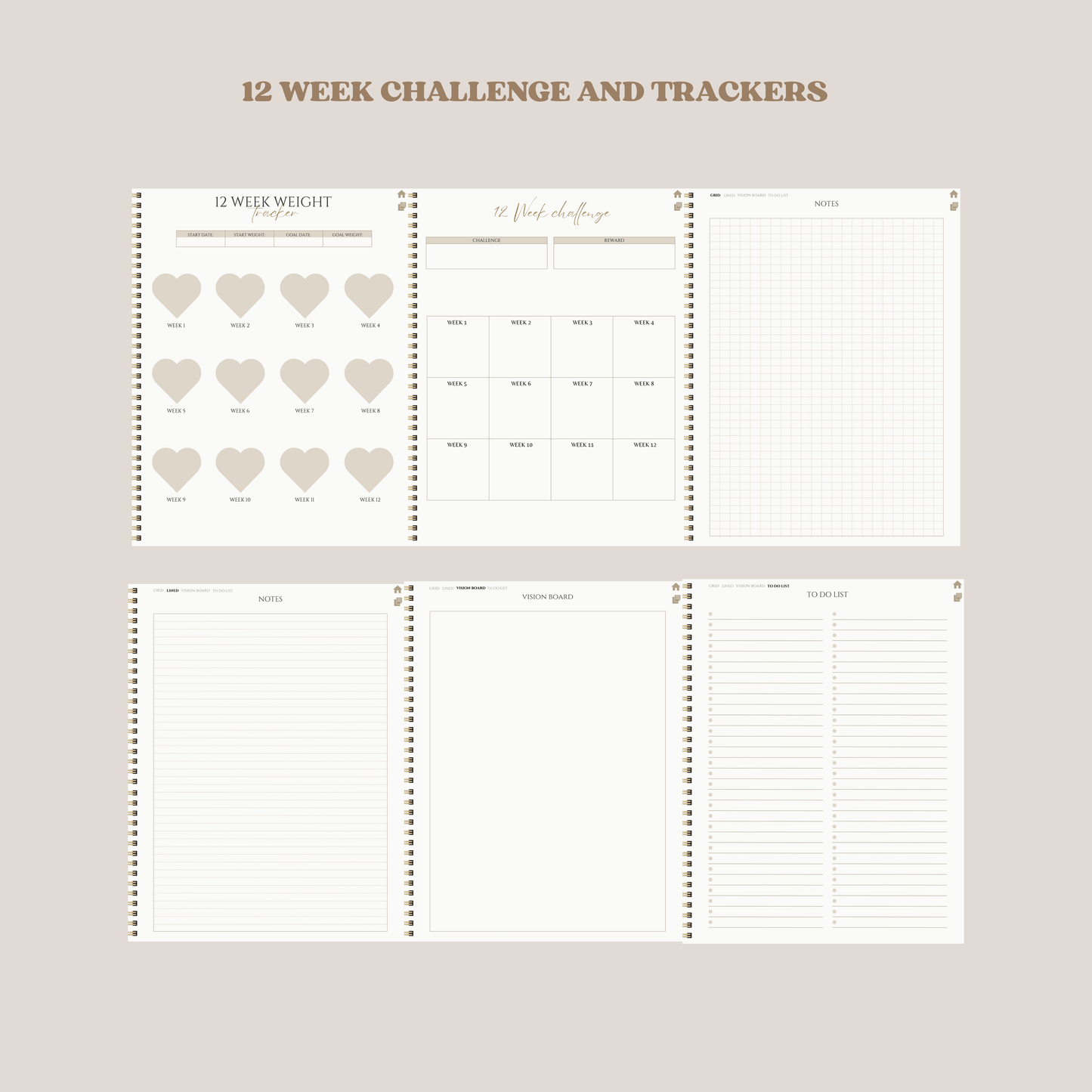
The 90 Days Challenge Fitness Planner was designed around this philosophy.
Not because yearly planners are bad.
But because many people need something that feels more manageable.
The planner begins with your vision.
Your goals.
Your starting point.
Your challenge.
Then it helps you stay accountable throughout the next 12 weeks.
Some pages are completed once at the beginning.
Some are used weekly.
One page is used daily.
Monthly reflections help you see how far you’ve come.
The goal isn’t to spend hours filling out a planner.
The goal is to create a plan, stay accountable, and focus on what matters most.


Focus on the Next 90 Days
Fitness can feel overwhelming when you’re trying to think about an entire year.
But what if you only focused on the next 90 days?
What if you committed to one challenge?
One season?
One transformation?
That’s where meaningful change often happens.
Not through perfection.
Not through endless planning.
But through consistent action over time.
The goal isn’t to complete 365 perfect days.
The goal is to take the next step.
Then the next one.
Then the next.
And before you know it, you’ve completed something many people never do.
You finished the challenge.
And that’s exactly what the 90 Days Challenge Fitness Planner was designed to help you do.