Why Most Fitness Planners Never Get Finished

Every January, thousands of people buy a new fitness planner.
They’re motivated.
They’re excited.
This is finally going to be the year they stay consistent.
The workouts are planned.
The goals are written down.
The tracker pages are ready.
For a few days, or maybe even a few weeks, everything feels great.
Then life happens.
A busy week.
A vacation.
A sick child.
A missed workout.
A few blank pages.
And before long, the planner ends up sitting on a shelf unfinished.
The problem is that most people think they failed.
But what if the problem isn’t you?
What if the problem is the planner itself?


The Pressure of 365 Days
Many fitness planners are built around a full year.
At first, that sounds motivating.
A full year of workouts.
A full year of healthy habits.
A full year of progress.
But there is a hidden problem.
A year is a very LONG time.
When you’re looking at 365 days ahead, it’s easy to feel overwhelmed before you even begin.
And if life gets busy and you miss a few weeks?
The pressure starts to build.
You open the planner and see dozens of unfinished pages.
You feel behind.
You feel guilty.
You tell yourself you’ll catch up later.
But most people never do.
Instead, they wait for the next Monday.
The next month.
The next January.
And the cycle starts again.


Why Perfection Is the Enemy of Progress
One reason so many fitness planners get abandoned is because they quietly encourage perfection.
Miss a few days and it feels like you’ve ruined your streak.
Miss a few weeks and it feels like you’ve ruined your year.
But fitness was never meant to be perfect.
Real life includes:
- busy seasons
- vacations
- family responsibilities
- schedule changes
- unexpected setbacks
The people who make progress aren’t the people who never miss a day.
They’re the people who keep going after they miss one.
That’s a very different mindset.
And it’s one that many yearly planners unintentionally make difficult.


More Pages Doesn’t Mean Better Results
Another common misconception is that bigger planners create better results.
More trackers.
More worksheets.
More journaling pages.
More prompts.
More planning.
But when it comes to fitness, more pages don’t automatically create more progress.
In fact, too much planning can sometimes become its own form of procrastination.
Many people don’t need more pages.
They need more clarity.
They need a system simple enough to use consistently.
Because consistency creates results.
Not the number of pages.

The Problem With Starting Over Every January
January has become the unofficial starting line for fitness goals.
People wait for the perfect moment.
A new year.
A new month.
A new Monday.
But meaningful change doesn’t happen because the calendar changed.
It happens because you decided to begin.
The problem with yearly planners is that they often make people feel like they only have one opportunity to start.
Miss January and suddenly it feels like you’re already behind.
But that’s simply not true.
Progress doesn’t care what month it is.
Progress only cares that you start.


Every Month Can Be Your January
This is one of the biggest reasons I love the idea of a 90-day challenge.
Instead of planning an entire year, you’re focused on one challenge, one season, and one transformation at a time.
Ninety days feels different.
It’s long enough to create meaningful change.
But short enough to stay focused.
And when the challenge is over?
You can start another one.
If you begin in January, great.
If you begin in June, great.
If you begin on a random Tuesday after a difficult season, that’s great too.
Every day is an opportunity to begin again.
Every month can be your January.


A Different Approach to Fitness Planning
The 90 Days Challenge Fitness Planner was created around this idea.
Not a 365-day commitment.
Not endless pages.
Not hundreds of trackers.
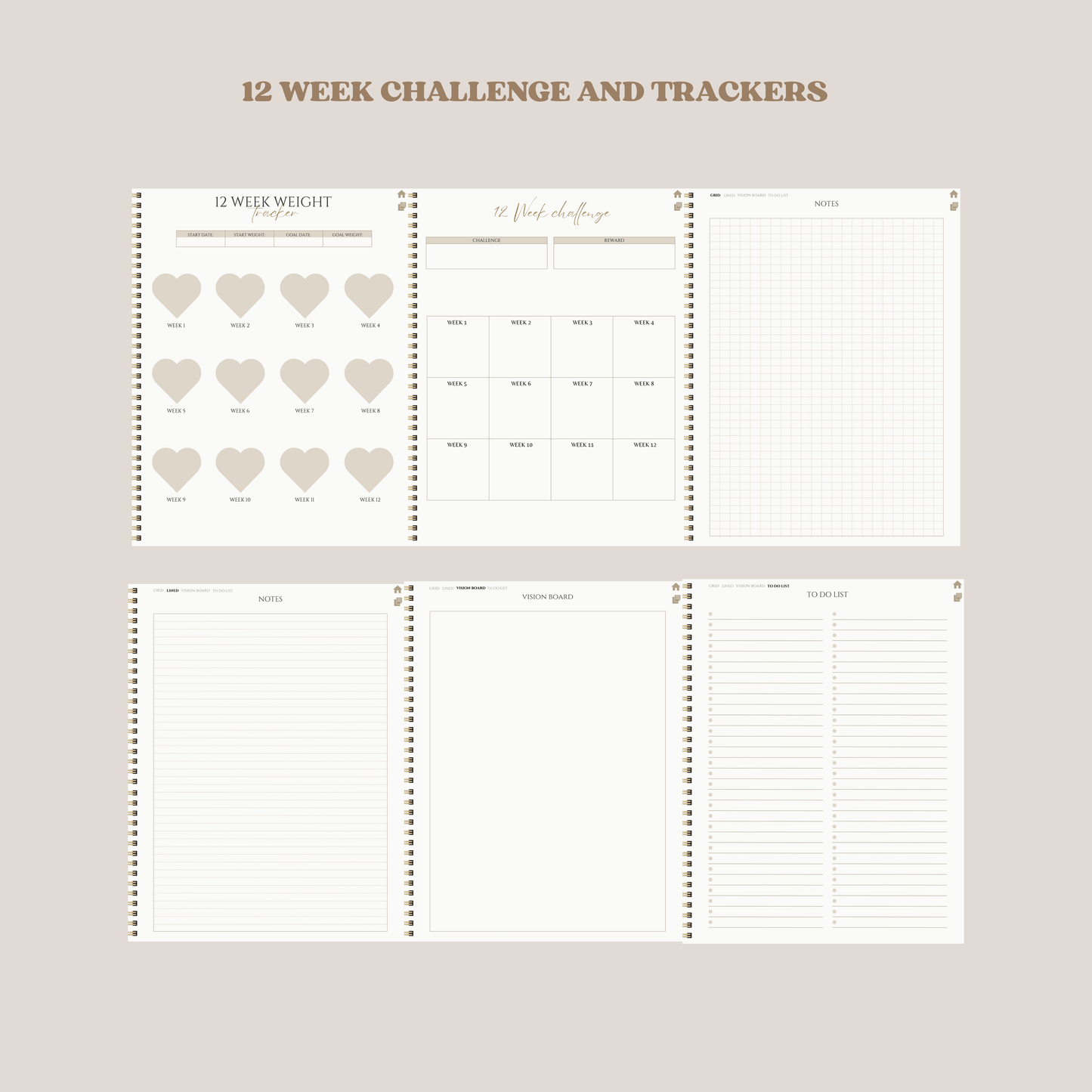
Just a focused system designed around a single 12-week challenge.
You start by creating your vision.
You establish your goals.
You define your challenge.
Then you spend the next 90 days tracking what matters most.
Workouts.
Meals.
Progress.
Habits.
Reflections.
Not because tracking creates results.
But because accountability helps you stay consistent long enough to see the results happen.


A Fitness Planner You Can Finish
One of the most satisfying feelings during a fitness journey is reaching the finish line.
Not because the journey is over.
But because you followed through.
You completed the challenge.
You stayed committed.
You proved to yourself that you could do it.
That’s why I believe fitness planning should feel achievable.
The goal isn’t to spend hours filling out a planner.
The goal is to set a vision, create a plan, and stay accountable for the next 12 weeks.
Most people don’t need a bigger fitness planner.
They need one they can actually finish.
And sometimes that’s the difference between starting another fitness journey and finally completing one.